Free shipping on orders of Rs. 1000/- and above.

What Is Kaya Jam? The Complete Beginner’s Guide
Anokhi Dasgupta
5/20/202614 min read


Introduction
Walk into a traditional café in Singapore or Malaysia early in the morning and you’ll notice something almost everyone seems to be ordering — crispy toast layered with cold butter and a rich golden spread called kaya jam.
For decades, kaya jam has been one of Southeast Asia’s most beloved breakfast staples. But outside Singapore and Malaysia, very few people knew about it. That is starting to change. From specialty cafés and artisanal bakeries to food creators on Instagram and YouTube, kaya toast and pandan-based desserts are slowly becoming part of a global food movement. And now, Indian consumers are beginning to discover the unique flavor that has made kaya a cult favorite across Asia.
Unlike regular fruit jams, kaya jam is creamy, custard-like, fragrant, and deeply comforting. Made using coconut milk, eggs, sugar, and pandan leaves, authentic kaya delivers a flavor experience that feels both nostalgic and completely new at the same time.
Some people describe it as:
coconut custard on toast
Southeast Asian caramel spread
pandan-flavored breakfast jam
the ultimate café comfort food
But kaya is more than just a spread. It represents:
slow breakfast rituals
café culture
handcrafted preparation
Southeast Asian culinary heritage
In this guide, we’ll explore everything you need to know about kaya jam — including its origins, ingredients, flavor, cultural significance, how to eat it, and why it’s becoming one of the most exciting emerging breakfast trends in India.
What Is Kaya Jam?
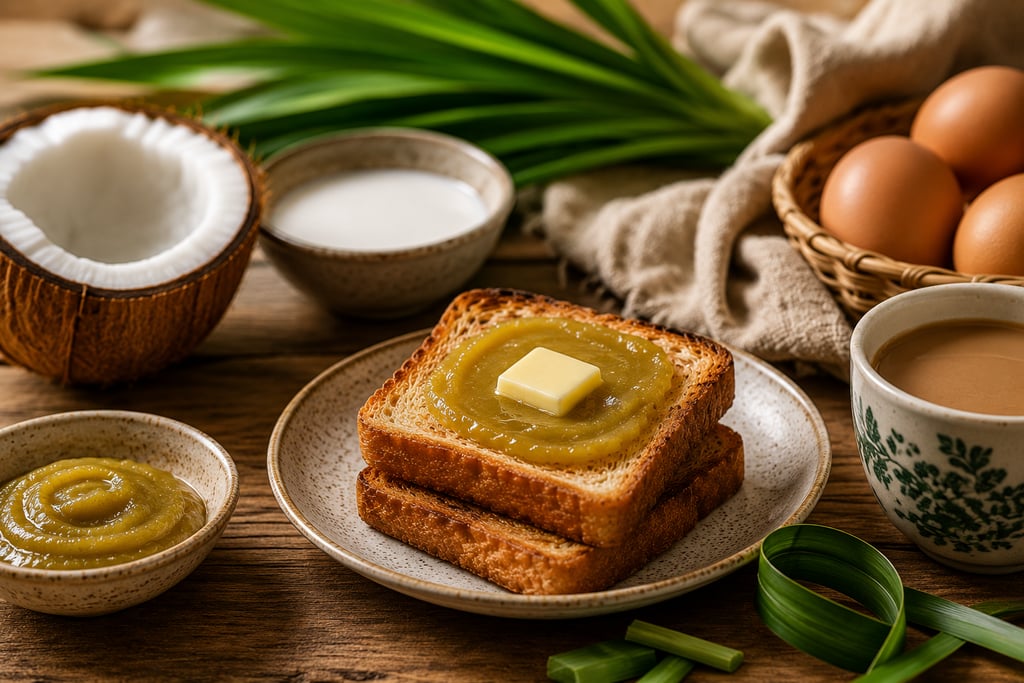
Kaya jam is a rich, creamy Southeast Asian spread traditionally made using coconut milk, eggs, sugar, and pandan leaves. Slow-cooked over gentle heat until silky and custard-like, kaya has been a beloved breakfast staple across Singapore and Malaysia for generations.
Although many people call it a “jam,” kaya is very different from the fruit jams most people are familiar with. Instead of tasting fruity or tart, kaya is smooth, buttery, lightly caramelized, and deeply aromatic. Its texture sits somewhere between custard and a spreadable dessert cream.
The flavor of authentic kaya comes from the balance of four simple ingredients. Coconut milk gives it richness, eggs create the signature velvety texture, sugar adds caramelized sweetness, and pandan leaves introduce a warm floral aroma that makes kaya instantly recognizable.
The result is comforting, indulgent, and surprisingly unique.
Why Is It Called “Kaya”?
The word “kaya” is believed to come from the Malay language, where it loosely translates to “rich.” The name perfectly reflects the experience of eating it.
Kaya feels rich not only in texture, but also in flavor and cultural history. For decades, it has been closely associated with slow breakfasts, neighborhood cafés, and comforting morning rituals throughout Southeast Asia.
Today, kaya continues to hold a special place in Singaporean and Malaysian food culture, especially as part of the iconic kaya toast breakfast.
Is Kaya Jam Actually a Jam?
Technically, kaya is closer to a spread or custard than a traditional jam.
Most jams are made from fruit and sugar, often thickened using pectin. Kaya, on the other hand, is made using coconut milk and eggs, which gives it a creamier and more luxurious consistency.
That is why people around the world also refer to it as:
kaya spread
coconut jam
coconut egg jam
pandan coconut spread
Despite these variations, “kaya jam” remains the most widely recognized term online.
What Makes Authentic Kaya Different?
Not all kaya tastes the same.
Traditional artisanal kaya is usually prepared slowly in small batches using real pandan leaves and coconut milk. This slow-cooking process is important because it creates the smooth, silky texture that authentic kaya is known for.
Mass-produced versions often rely on artificial pandan flavoring, stabilizers, or excessive sugar, which can flatten the flavor and reduce the richness of the experience.
Authentic kaya tends to taste more balanced, fragrant, and comforting. Instead of overwhelming sweetness, good kaya delivers layers of flavor that gradually unfold — creamy coconut, warm caramel notes, and the distinctive aroma of pandan.
The Rise of Kaya Toast
Kaya became internationally famous because of kaya toast, one of Singapore’s most iconic breakfast dishes.
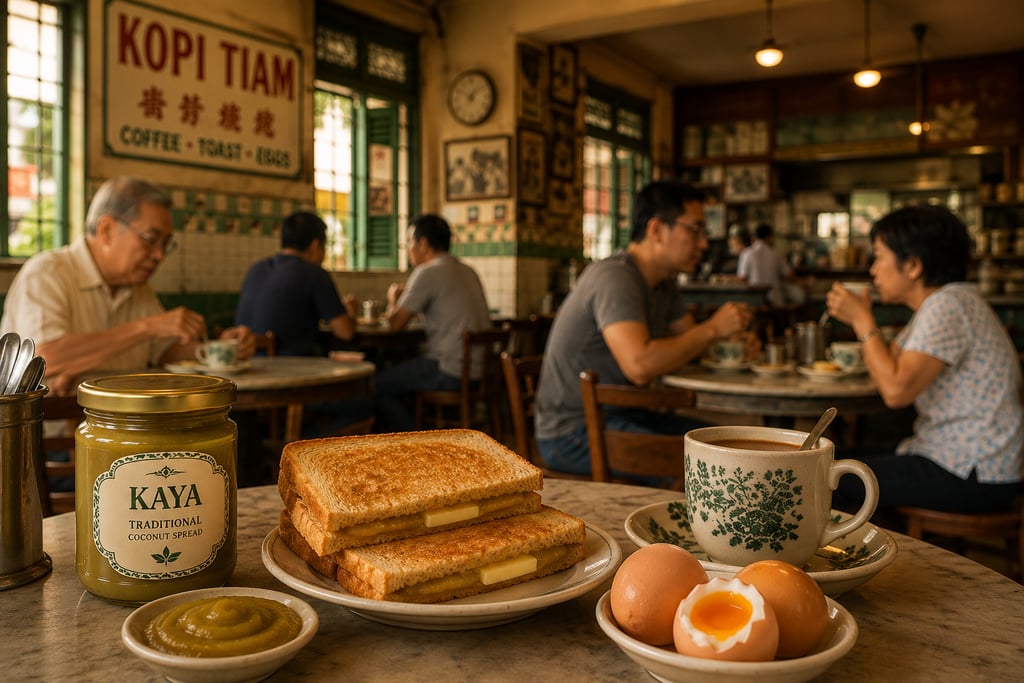
Traditional kaya toast is simple: toasted bread layered with kaya and slices of cold butter. Yet the contrast of textures and temperatures makes it unforgettable. The crisp toast, creamy spread, and chilled butter come together in a way that feels both indulgent and comforting.
In Singapore and Malaysia, kaya toast is commonly enjoyed with soft-boiled eggs and kopi, the region’s traditional coffee.
Over time, kaya evolved beyond traditional breakfast tables and found its way into modern cafés, bakeries, and dessert culture. Today, it is used in pastries, pancakes, cakes, waffles, and even specialty desserts.
Why is Kaya Becoming Popular in India?
Indian consumers are becoming increasingly curious about global café culture and premium breakfast experiences. As people explore new flavors beyond conventional jams and spreads, kaya offers something genuinely different.
Part of the appeal lies in its uniqueness. Kaya feels familiar enough to enjoy comfortably, yet distinctive enough to feel exciting. The growing popularity of Southeast Asian cuisine, artisanal foods, and pandan-based desserts has also helped introduce kaya to a wider audience in India.
For many people, discovering kaya is not just about trying a new spread. It is about experiencing a different kind of breakfast culture — one centered around warmth, comfort, and slowing down for a few moments in the morning.
The Origins of Kaya: A Story Rooted in Southeast Asian Breakfast Culture
To truly understand kaya jam, it helps to understand the culture it comes from.
Kaya is deeply connected to the everyday breakfast traditions of Singapore and Malaysia, where it has been enjoyed for generations as part of a simple but comforting morning ritual.
Long before artisanal cafés and social media food trends made kaya internationally popular, it was already a staple in local coffee shops known as kopi tiam. These traditional cafés became gathering places where people would begin their mornings with toast, coffee, conversation, and familiar comfort foods.
At the center of that experience was kaya toast.
The Rise of Kopi Tiam Culture
The phrase “kopi tiam” comes from a combination of Malay and Hokkien words that roughly translate to “coffee shop.” These cafés became an important part of daily life across Singapore and Malaysia throughout the 20th century.
Unlike modern brunch cafés, kopi tiams were simple, affordable, and community-driven. Office workers, students, families, and elderly regulars would gather there every morning for breakfast before starting the day.
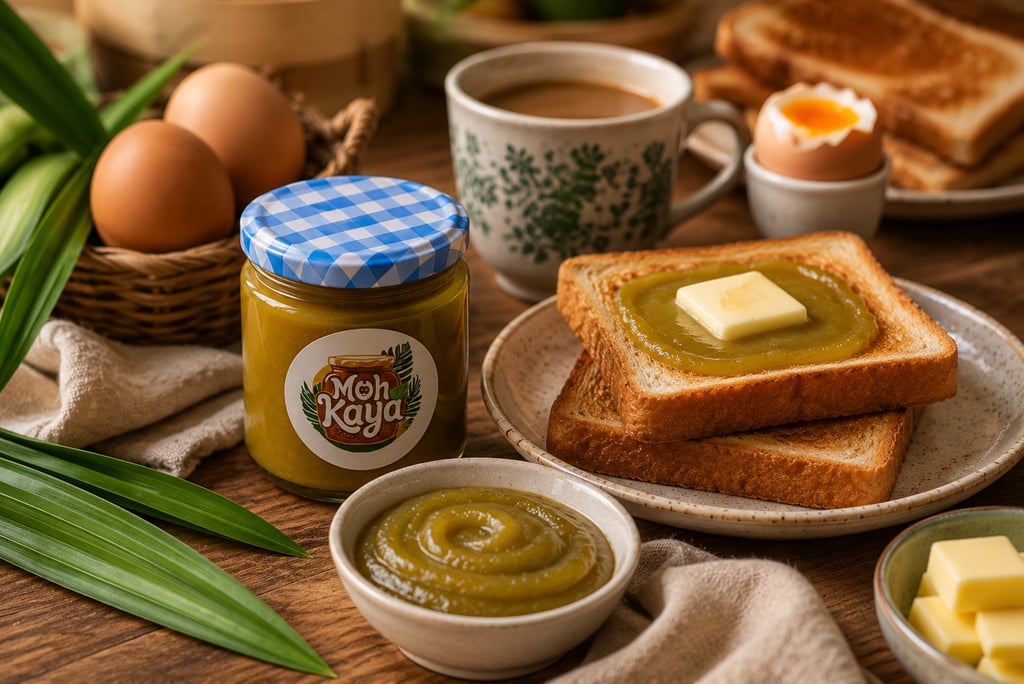
A traditional kopi tiam breakfast usually included:
kaya toast
soft-boiled eggs
strong local coffee or tea
What made this breakfast special was not complexity, but consistency and comfort. The flavors were familiar, satisfying, and deeply nostalgic for many Southeast Asians.
Even today, some of the most famous breakfast spots in Singapore still revolve around this same timeless combination.
How Kaya Became a Breakfast Staple?
Historians believe kaya has roots connected to Hainanese communities who migrated through Southeast Asia many decades ago. Over time, local ingredients like coconut milk and pandan leaves became central to the recipe, helping create the kaya we know today.
The spread gained popularity because it was affordable, filling, easy to pair with bread, and rich in flavor. Eventually, kaya became more than just a spread. It became part of everyday life. For many families in Singapore and Malaysia, the smell of kaya and toasted bread is closely tied to childhood memories, family breakfasts, and weekend café visits. That emotional connection is one of the reasons kaya continues to hold such cultural significance even today.
How Kaya Toast Became Iconic?
One of the most fascinating things about kaya toast is how simple it is. There are no complicated ingredients or elaborate techniques. Yet the balance of flavors and textures feels incredibly satisfying.
Traditional kaya toast typically combines crispy toasted bread with a thick layer of kaya and slices of cold butter placed in the center. The warmth of the toast gently softens the butter while the kaya adds sweetness and fragrance. The result is rich without feeling heavy.
When paired with kopi — Singapore’s strong traditional coffee — the combination becomes even more comforting. Over time, kaya toast evolved from a humble breakfast into one of Southeast Asia’s most recognizable food experiences. Today, tourists visiting Singapore often consider it a must-try dish alongside famous street foods and café culture.
From Local Tradition to Global Discovery
For many years, kaya remained relatively unknown outside Southeast Asia. But that began to change with the rise of:
global café culture
food-focused social media
international travel
curiosity around Asian flavors
As people started exploring new breakfast experiences beyond traditional jams and spreads, kaya slowly gained international attention. Its appeal is easy to understand. Kaya feels both nostalgic and modern at the same time. It has the comfort of a homemade breakfast spread, yet tastes completely different from anything commonly found in Western or Indian breakfast culture.
Today, kaya can be found in artisanal bakeries, specialty cafés, dessert menus, premium grocery stores, modern brunch restaurants etc. And now, it is gradually finding a growing audience in India as well.
Why Kaya Resonates with Modern Consumers?
Part of kaya’s growing popularity comes from the fact that people increasingly crave food experiences that feel authentic and story-driven. Kaya is not just another sweet spread on a supermarket shelf. It represents heritage, craftsmanship, an iconic café culture, slow mornings, and comfort food traditions.
In a world dominated by mass-produced breakfast products, kaya feels personal and distinctive. That sense of warmth and authenticity is exactly what continues to make kaya special — even after generations of changing food trends.
What Does Kaya Taste Like?
One of the most common questions people ask before trying kaya for the first time is:
“What does kaya actually taste like?”
The honest answer is that kaya is difficult to compare directly to any single spread or dessert. Its flavor is familiar in some ways, yet completely unique at the same time.
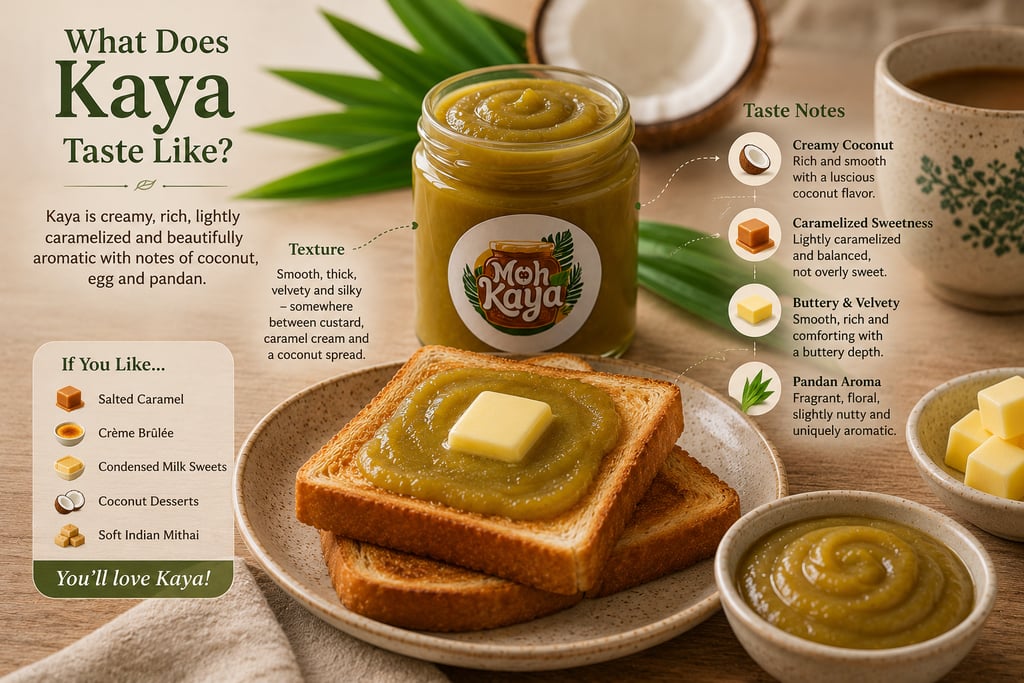
The first thing you notice is the texture. Authentic kaya is smooth, thick, and velvety — somewhere between custard, caramel cream, and a silky coconut spread. It melts gently onto warm toast, creating a rich and comforting mouthfeel without feeling overly heavy. Flavor-wise, kaya is mildly sweet with layers of warmth and aroma that slowly develop as you eat it. You’ll notice:
creamy coconut richness
lightly caramelized sweetness
buttery depth
delicate floral notes from pandan
Pandan is what gives kaya its distinctive personality. Often described as Southeast Asia’s version of vanilla, pandan adds a fragrant aroma that tastes slightly nutty, grassy, floral, and almost dessert-like. If you enjoy foods like salted caramel, crème brûlée, coconut desserts, condensed milk sweets, or soft milk-based Indian mithai, there’s a very good chance you’ll love kaya.
Many first-time tasters describe kaya as:
“comforting”
“nostalgic”
“surprisingly addictive”
“like breakfast and dessert combined”
Unlike fruit jams, kaya is not tangy or sharp. The sweetness is softer and more balanced, which makes it pair beautifully with buttered toast, coffee, croissants, pancakes, and pastries. The experience becomes even better when eaten the traditional way — spread generously on warm toast with slices of cold butter melting into the kaya. That contrast of creamy, salty, sweet, warm, and fragrant flavors is exactly what made kaya toast famous across Singapore and Malaysia.
What Is Pandan?
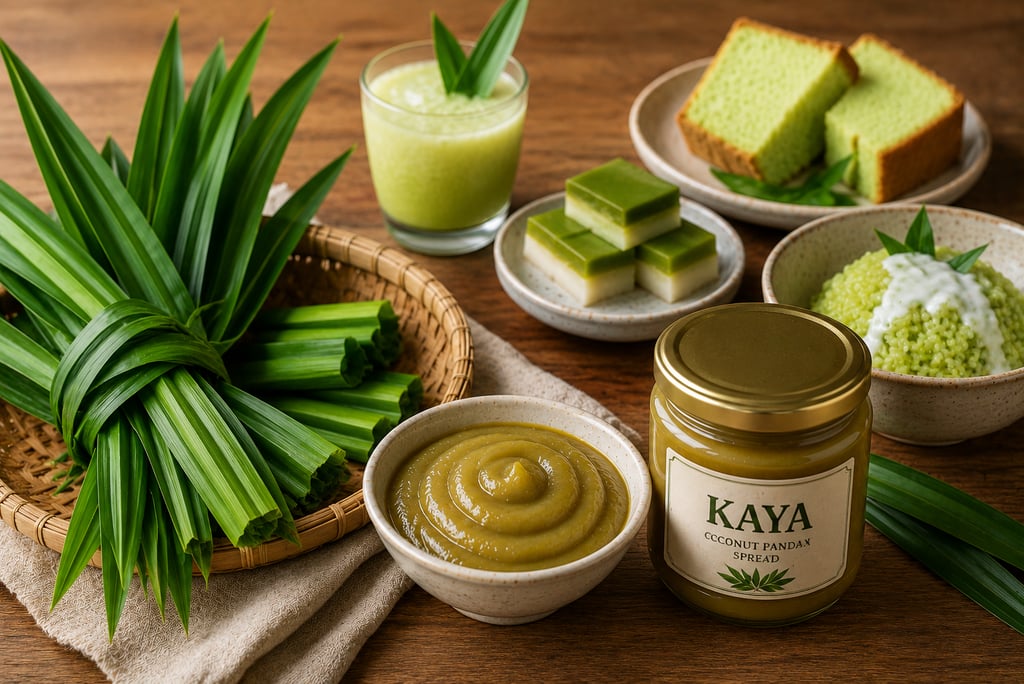
If kaya is the heart of Singapore-style breakfast culture, pandan is the ingredient that gives it its soul. Pandan is a tropical plant widely used across Southeast Asia in both sweet and savory dishes. Often called the “vanilla of Asia,” pandan leaves are prized for their uniquely fragrant aroma and naturally comforting flavor.
For generations, pandan has been a staple ingredient in countries like Singapore, Malaysia, Thailand, Indonesia, Vietnam, and the Philippines. Its long green leaves are typically infused into coconut milk, desserts, cakes, rice dishes, and drinks to add aroma and depth. In authentic kaya jam, pandan is essential. Without pandan, kaya loses the distinctive flavor that makes it instantly recognizable.
What Does Pandan Taste Like?
Pandan has one of the most unique flavor profiles in Asian cuisine. It is difficult to compare directly to a single ingredient because the flavor contains several layers at once. People often describe pandan as floral, creamy, slightly grassy, vanilla-like, nutty, and subtly coconutty. Some even compare the aroma to a mix of vanilla, jasmine rice, coconut, and fresh-cut grass.
The flavor is gentle rather than overpowering, which is why pandan pairs beautifully with creamy ingredients like coconut milk and butter. In kaya, pandan balances the richness of eggs and coconut while adding freshness and aroma. That balance is what gives authentic kaya its comforting and almost addictive quality.
Why Is Pandan Used So Often in Southeast Asian Desserts?
Pandan plays a role in Southeast Asian cuisine similar to what vanilla plays in Western desserts. It adds warmth, fragrance, and complexity to recipes without overwhelming the other ingredients. Pandan is commonly used in:
chiffon cakes
coconut puddings
sticky rice desserts
waffles
custards
pastries
ice cream
sweet porridges
milk-based desserts
Its naturally vibrant green color has also made pandan desserts visually iconic across Asia. Today, pandan is increasingly appearing in modern cafés and dessert menus around the world as global interest in Asian flavors continues to grow.
Why Authentic Kaya Requires Real Pandan
One of the biggest differences between authentic kaya and lower-quality versions is the use of real pandan leaves. Traditional artisanal kaya is slowly infused with pandan during the cooking process, allowing the flavor to develop naturally over time. Mass-produced spreads often rely on artificial flavoring or coloring instead. While these versions may look similar, they usually lack the depth, aroma, and freshness of authentic pandan kaya.
Real pandan gives kaya its signature identity. It transforms kaya from a simple sweet spread into something layered, fragrant, and deeply comforting. That is why pandan is not just another ingredient in kaya — it is one of the defining reasons people fall in love with it in the first place.
Ingredients Used in Authentic Kaya
One of the reasons kaya feels so unique is that it is made using just a handful of simple ingredients — yet the final flavor is incredibly layered and comforting.
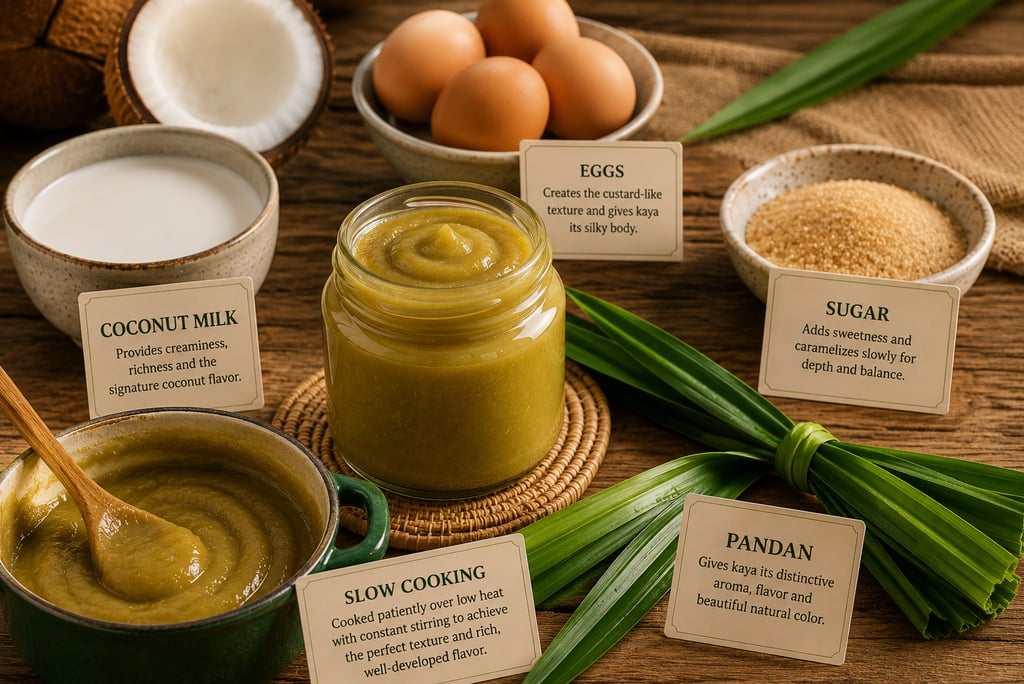
Authentic kaya traditionally combines coconut milk, eggs, sugar, and pandan leaves. When prepared correctly, these ingredients transform into a silky, aromatic spread with remarkable depth. Coconut milk forms the foundation of kaya. It gives the spread its creamy body and smooth richness while adding gentle tropical notes that make kaya feel warm and indulgent.
Eggs are equally important because they create the custard-like texture that defines authentic kaya. As the mixture cooks slowly, the eggs thicken naturally, giving kaya its velvety consistency without needing artificial stabilizers. Sugar does more than simply add sweetness. During the cooking process, it slowly caramelizes and develops deeper flavors that make kaya taste soft, rounded, and balanced rather than overly sugary. Then comes pandan — the ingredient that gives kaya its unmistakable aroma. Pandan adds floral, nutty, and vanilla-like notes that elevate kaya from a simple coconut spread into something far more distinctive.
The Importance of Slow Cooking
Traditional kaya is not rushed. Authentic artisanal kaya is typically cooked slowly over low heat while continuously stirred to achieve the perfect texture. This process allows the flavors to gradually deepen and blend together naturally. That slow cooking is one of the biggest reasons artisanal kaya tastes dramatically different from mass-produced versions.
Many commercial spreads use:
artificial flavoring
preservatives
thickeners
excessive sugar
synthetic coloring
While these products may imitate the appearance of kaya, they often lack the smooth texture, fragrance, and depth of flavor that real pandan and slow cooking create. Artisanal kaya feels richer, fresher, and more balanced because it respects the traditional process instead of trying to shortcut it. And once you taste authentic small-batch kaya, the difference becomes immediately obvious.
How Is Kaya Different From Regular Jam?
At first glance, kaya may look similar to a traditional breakfast jam. It is spreadable, slightly sweet, and commonly enjoyed on toast. But once you taste it, the difference becomes immediately obvious. Unlike regular fruit jams, kaya is richer, creamier, and far more layered in flavor. It is closer to a silky custard spread than a fruit preserve. Traditional jams are usually made from fruits like strawberry, blueberry, mango, or orange. Kaya, however, is made using coconut milk, eggs, sugar, and pandan leaves — giving it an entirely different texture and flavor profile.
One of the biggest differences is the eating experience itself. Fruit jams tend to taste bright, fruity, and slightly tart, while kaya feels warm, buttery, smooth, and comforting.
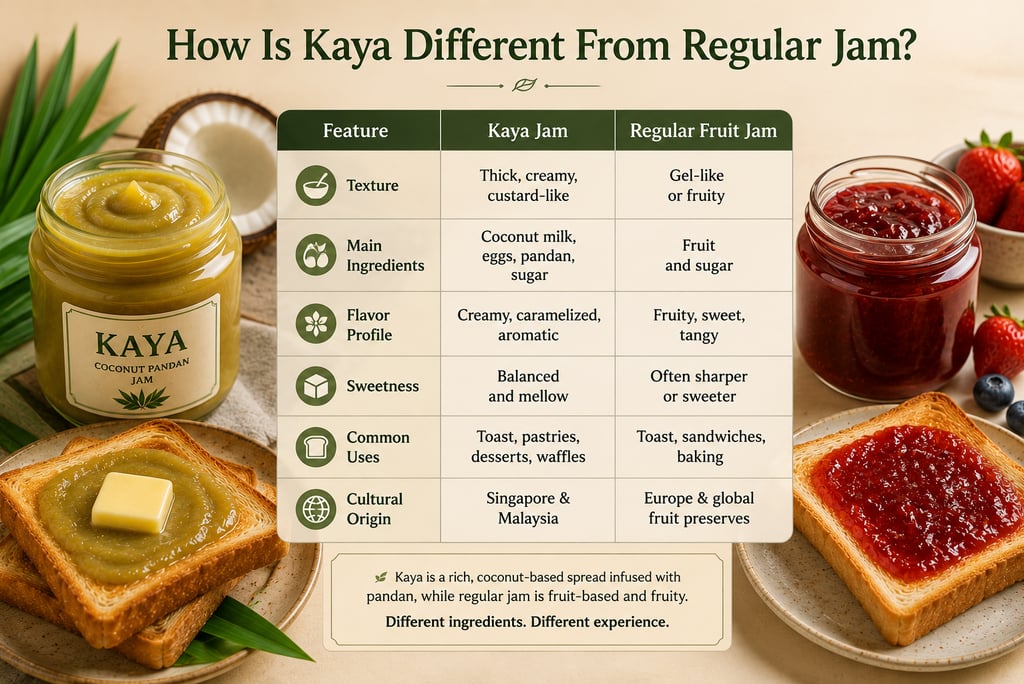
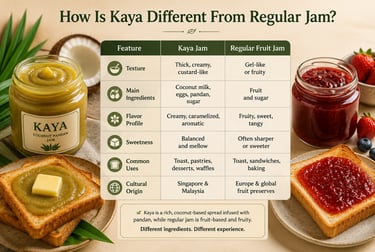
Another major difference is aroma. Authentic kaya contains pandan, which gives it a fragrant vanilla-like character rarely found in conventional jams. That aroma is one of the reasons kaya feels so distinctive and memorable.
Kaya also pairs differently with food. While fruit jams are often used for sweetness alone, kaya creates a richer café-style experience — especially when combined with buttered toast and coffee. For many people, kaya feels less like a simple jam and more like a luxurious breakfast spread. That is exactly why so many first-time tasters become instantly obsessed with it.
How to Eat Kaya Jam?
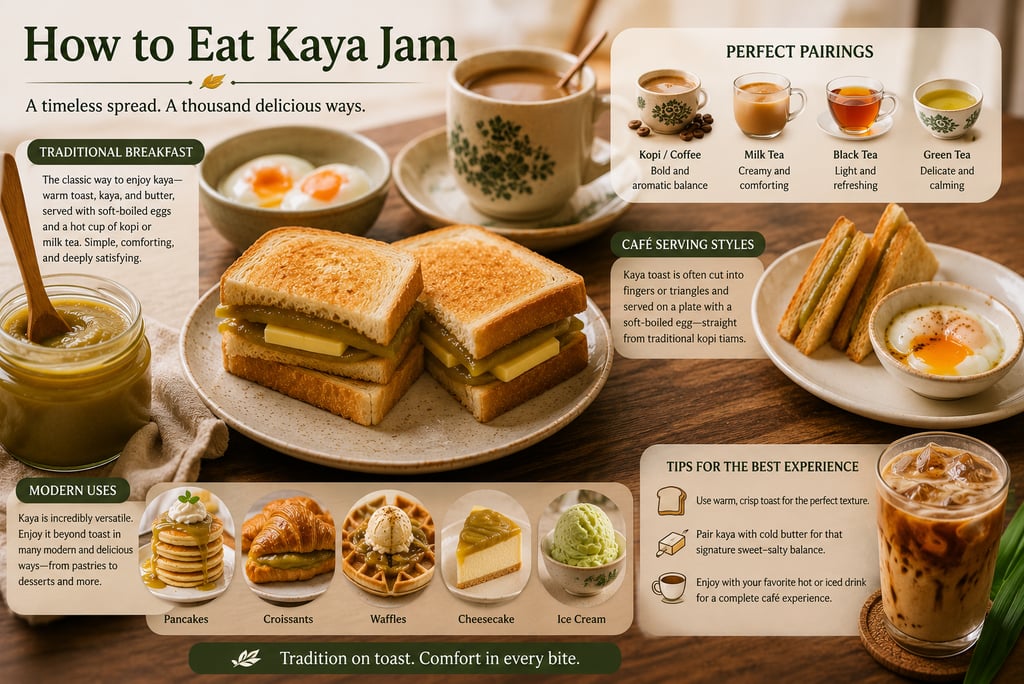
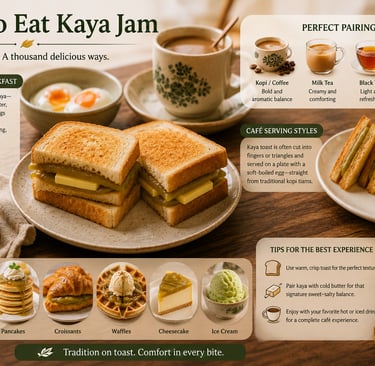
The most iconic way to eat kaya is as part of a traditional Singapore-style breakfast: warm toasted bread layered with kaya and slices of cold butter. It sounds simple, but the experience is surprisingly unforgettable.
The toast is crisp and golden, the butter slowly melts into the bread, and the kaya adds a smooth, fragrant sweetness that feels both comforting and indulgent. In traditional kopi tiam cafés across Singapore and Malaysia, this breakfast is often served with soft-boiled eggs and strong local coffee or milk tea.
What makes kaya special is not just the flavor, but the ritual around it. Kaya breakfasts are meant to feel relaxed and comforting — something enjoyed slowly rather than rushed. That sense of warmth and familiarity is one of the reasons kaya toast remains deeply loved across generations.
Coffee is traditionally the most popular pairing because its bold bitterness balances the creamy sweetness of kaya beautifully. Milk tea, black tea, and even lightly sweetened iced coffee also pair exceptionally well. The goal is balance: allowing the richness of coconut and the aroma of pandan to remain the highlight of the experience.
Although kaya is rooted in traditional breakfast culture, it has also become incredibly popular in modern cafés and home kitchens. Today, people use kaya in croissants, pancakes, waffles, crepes, pastries, cheesecakes, and even ice cream desserts. Its custard-like texture makes it ideal for spreading, layering, or filling baked goods. Some people enjoy kaya on warm brioche or sourdough, while others swirl it into yogurt bowls or drizzle it over pancakes for a more contemporary breakfast experience.
One of the reasons kaya works so well across different dishes is that its flavor is gentle and versatile. It adds richness without overpowering the other ingredients. Whether eaten the traditional way with toast and coffee or used creatively in modern desserts, kaya has a way of turning an ordinary breakfast into something slower, cozier, and far more memorable.
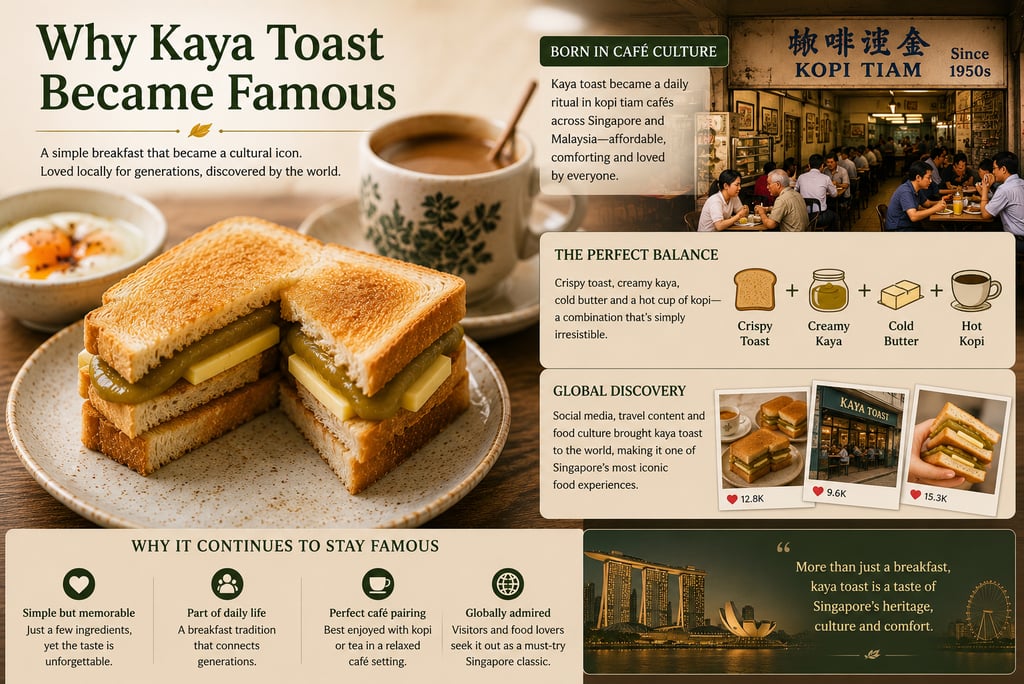
Why Kaya Toast Became Famous
Kaya toast became famous because it offers something very few breakfast foods do — simplicity that feels deeply comforting and memorable.
For decades, kaya toast has been a cornerstone of Singapore breakfast culture. Found in traditional kopi tiam cafés across Singapore and Malaysia, the dish became popular as an affordable and satisfying morning meal enjoyed by people from all walks of life.
The classic version is incredibly simple: crispy toasted bread filled with kaya and slices of cold butter. Yet the contrast works beautifully. The warm toast turns crisp and golden, the butter slowly softens between the slices, and the kaya adds a creamy sweetness infused with coconut and pandan aroma. Paired with strong local coffee or milk tea, the experience feels rich, comforting, and surprisingly addictive.
Over time, kaya toast became more than just breakfast — it became part of everyday café culture in Singapore.
Even today, many locals begin their mornings with the same ritual:
kaya toast
soft-boiled eggs
kopi or tea
relaxed conversation before work
As global café culture expanded through Instagram, YouTube, and travel content, kaya toast began attracting international attention. Food lovers were drawn to its minimalist presentation, nostalgic atmosphere, and unique flavor profile that felt different from Western breakfast spreads.
Today, kaya toast is often considered one of Singapore’s most iconic food experiences alongside dishes like laksa and Hainanese chicken rice. And as more people in India explore global breakfast trends and artisanal café experiences, kaya toast is slowly becoming a discovery people actively seek out rather than accidentally stumble upon.
moh kaya
The Goodness of Kaya.
Handcrafted to Perfection.
FSSAI Lic. No.: 21226010002451
Join us on
Instagram
© 2026. AxPNext LLP. All rights reserved.